
 |
 |
 |
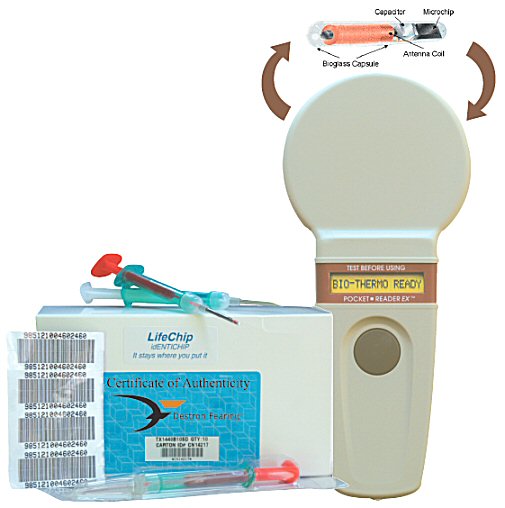
What is a Microchip?Microchips are tiny, passive electronic devices. During the manufacturing process, each microchip is individually inscribed and programmed to store a unique, permanent 15 digit identification code. The microchip is coupled to an antenna and sealed in an inert glass capsule small enough to be injected under the skin using a hypodermic needle. The smallest microchip is a bit bigger than a grain of rice (8mm x 2.1mm) and can range up 28mm in length and 2.1 to 3.5mm in diameter. Once programmed the unique code is unalterable and cannot be erased. Destron LifeChips are fitted with a unique Bio-Bond® anti-migration cap to prevent the microchip moving away from the scanning area. All Destron LifeChips Microchips are manufactured to Australian Standard AS 5018/9 and International ISO 11784/5 in an ISO 9002 facility. Lifechips also meet ISO1135-1 Sterility Standards How do they work? The microchip is implanted into an animal using a procedure similar to a routine vaccination. After implantation the chip remains with the animal for life, where it provides the animal’s unique ID number anytime it is scanned by a compatible electronic scanner. The microchip is a passive device, i.e. it has no power of it's own. The scanner sends a signal to the microchip, providing the power needed by the microchip to send its unique code back to the scanner and positively identify the animal. The scanner can read the microchip unique id number up to 75mm away. Microchips are designed to have a life exceeding 25 years.
|
 |